Tooth autotransplants
Conservative - rehabilitative therapy
DOI:
https://doi.org/10.35954/SM1998.20.1.14Keywords:
Autotransplantation; Maxillofacial surgery; Dentistry; Tooth transplantation; Tooth transplantation; Maxillofacial surgery.Abstract
This monographic work presents an extensive bibliographic review on the subject of "DENTAL TRANSPLANTS" in order to provide an update on the subject as exhaustively as possible.
DENTAL TRANSPLANTS" in order to update the subject as exhaustively as possible. At the same time, a research and analysis of the clinical-radiological results obtained in dental autotransplants performed in our environment is presented.
The specific objective of this research was to find, through a simplified surgical-endodontic technique, a favorable prognosis for dental transplants, giving greater predictability to the method and avoiding the most frequently cited failures in the literature: "loss of pulp vitality, ankylosis and rhizalysis".
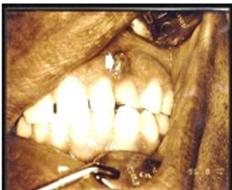
Autotransplantation was performed on 25 patients according to a series of four protocols prepared for this purpose, citing and highlighting the importance of these protocols for the standardization of therapeutic procedures.
As a conclusion, it is stated that the high percentage of successes achieved endorses the endodontic surgical methodology used and therefore consolidates tooth transplants as a "conservative and rehabilitative" therapy that is reliable, successful and predictable in time, with the possibility of being applied at hospital level not only because of its reduced costs, but also because of the low professional time it requires.
Downloads
References
(1) MOLAS LOPEZ F. Injertos dentarios Ed. Afas.Bs.As. Argentina.1945.
(2) WIDMAN L. Om transplantatión af retinerede tander. Svensk Tandlakar TidsKr. 1917, 8:311.
(3) APFEL H. Dental transfer. Life,May 10,1948,127.
(4) APFEL H. Transplantation of the unerupted third molar tooh. Oral Surg. 1948,9:96.
(5) MILLER HM. Tooh Transplantation. J. Oral Surg. 1951,9:68.
(6) MILLER HM.Transplantation and reimplantation of teeth.Oral Surg. 1951, 9:68.
(7) ANDREASEN J, HORTING-HANSEN, JOLST O. A clinical and radiographic study of 76 autotransplanted third molars. Scand J Dent. Res. 1970, 78:512.
(8) NORDENRAM A, BERGMAN G. Autotransplan- tation of teeth. Br J Oral Surg.1969, 7:188 9.
(9) SHULMAN LB. Tooth transplantation: transplant inmunology and surgical techniques. In Guralnick,WC, Ed. Textbook of oral Surgery,BostonLittle,Brown & Co.1968.
(10) SHULMAN LB. A comparision of autologous and allogeneic tooth transplants in rhesus monkeys. J Oral Surg. 1970,28:168.
(11) SHULMAN LB, KALIS JP. Fluoride inhibition of tooth-replant resorption in cebus monkeys. 1968. J. Oral Ther Pharmacol. 1968,4:331.
(12) ANDREASEN JO. Reimplantación y trasplantes en Odontología. Ed. Panamericana. Bs. As. Argentina. 1992.
(13) LASKIN D. Cirugía bucal y Maxilo-facial. Ed. Panamericana. Bs. As. Argentina.1987.
(14) NORDENRAM A, BJORNESJO K. Allotransplan- tation of teeth in man on the basis of the normal limphocyte transfer (NLT) test. Odont Rev 1970, 21:169.
(15) JANSEN J, FIBAEK B. Clinical experience of auto and allotransplantation of teeth. Int. Dent. J. 1972, 22:27.
(16) SLAGSUOLD O, BJERCKE B. Autotransplantation of premolars with partly formed roots. Am J Orthod 1974, 66:355.
(17) SLAGSUOLD O, BJERCKE B. Indications for autotransplantation in cases of missing premolars. Am J Orthod 1978, 74:241.
(18) POGREL MA. Evaluation of over 400 autogenous teth transplants. J. Oral Maxillofac. Surg. 1987, 205-211.
(19) CORDAIS Et al. Graffes dentaires et implantations.Editions Techniques Encycl. Med. Chir. (Paris-France) Stomat. Odont. 22305 A.10,1992.
(20) TANG EL. Multispecialty team management of a case with impacted maxillary permanet canines. J. Dent Child 1992,May-Jun; 59 (3), 190-195.
(21) HAUSEN G, EBALK C. Pulpal status after autogenous transpalntation of fully developed maxillary canines. Oral Surg. 1977, 44:106.
(22) HOFFMAN R. The formation of periodontal tissues around subcutaneously transplanted hamster molars. J Dent Res 1960, 39:781.
(23) ANDREASEN JO. The effect of splinting upon periodontal healing after replantation of permanent incisors in monkeys. Acta Odont. Scand. 1975.a. 33:313.
(24) GURALNICK WC. Autogenous and allogeneic tooth transplantation. Oral Surg. 1970, 28:575.
(25) SKOGLUND A, HASSELGREN G. Tissuechanges in immature dog teeth autotransplanted to surgically prepared sockets. Oral Surg. Oral Med. Oral Pathol. 1992 Dec. 74(6):789-795.
(26) LEWIS OH, ELDRIGE DJ. Orthodontic/restorative interface. Dent-Up date, Jun 1992, 19 (5),195-199.
(27) HORCH HH. Cirugía Oral y MaxiloFacial.Tomo I.Ed. Masson S,A. Barcelona. 1995.
(28) INOUE T, SHIMONO M. Repair dentinogenesis following transplantation into normal and germ free animals. Proc. Finn-Den-Soc. 1992, 88 Suppl. 1: 183-194.
(29) KRAKOW A, BERK H, GRN P. Terapeutic induction of root formation in the exposed incompletely formed tooth with vital pul. Oral Surgery. 1977, 43:755.
(30) NEDER A. Clinical observation on 20 dental transplants. Isr. J. dent. Med. 1969, 18:7.
(31) EMMERSTEN E, ANDREASEN JO. Replantation of extracted molars: a radiographic and histological study. Acta Odont. Scand. 1966, 24:327.
(32) PAFFORD E. Homogeneous transplants of preserved frozen teeth. Oral Surg. 1956, 9:55.
(33) LOE H. Experimental replantation of teeth in dogs and monkeys. Arch. Oral Biol. 1961, 3:176.
(34) ANDREASEN JO. A time related study of periodontal healing and root resorption activity after replantation of mature permanet incisors in monkeys. Swed. Dent. J. 1980a. 4:101.
Published
How to Cite
Issue
Section
License
Until 2024 we use the Creative Commons Attribution/NonCommercial Attribution 4.0 International License https://creativecommons.org/licenses/by-nc/4.0/deed.es. Which states that: you are free to share, copy and redistribute the material in any medium or format, as well as to adapt, remix, transform and build upon the material. Under the following terms:
Attribution: you must give proper credit , provide a link to the license, and indicate if changes have been made . You may do so in any reasonable manner, but not in such a way as to suggest that you or your use is endorsed by the licensor.
NonCommercial: you may not use the material for commercial purposes.
As of 2025 authors retain their copyright and assign to the journal the right of first publication of their work, which shall simultaneously be subject to the license https://creativecommons.org/licenses/by-nc-sa/4.0/deed.es that permits sharing, copying and redistribution of the material in any medium or format provided that initial publication in this journal is indicated. Adapt, remix, transform and build upon the material. If you remix, transform, or build from the material, you must distribute your contribution under the same license as the original and may not make use of the material for commercial purposes.
Under the following terms:
1. Attribution: you must give proper credit, provide a link to the license, and indicate whether changes have been made. You may do so in any reasonable manner, but not in such a way as to suggest that you or your use is endorsed by the licensor.
2. NonCommercial: you may not use the material for commercial purposes.
3. ShareAlike: if you remix, transform or build upon the material, you must distribute your contribution under the same license as the original.




PlumX Metrics