Disinfection and sterilization in dentistry against COVID-19.
DOI:
https://doi.org/10.35954/SM2023.42.2.4.e402Keywords:
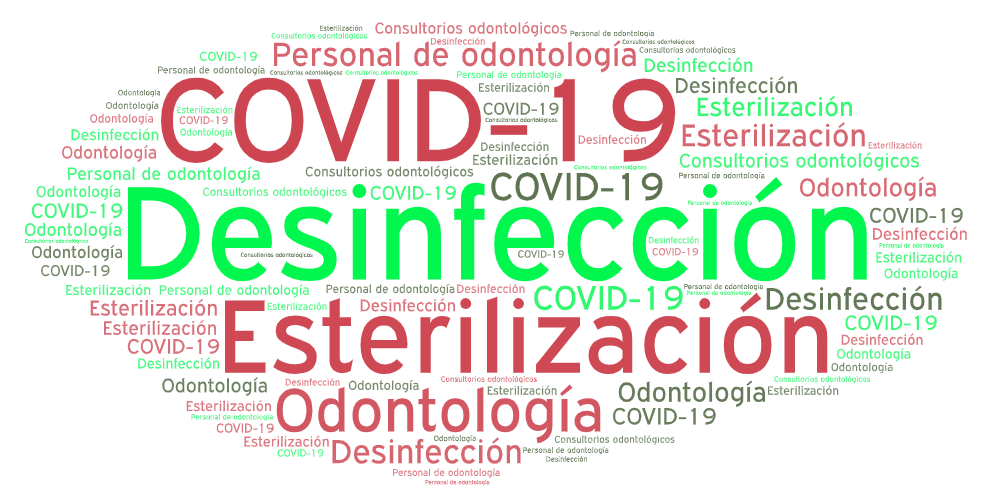
Dental Offices, COVID-19, Desinfection, Hand Disinfection, Sterilization, Dental Staff.Abstract
Since the declaration by the World Health Organization of the beginning of the COVID-19 pandemic caused by the SARS-CoV-2 virus in March 2020, health professionals were exposed to this highly contagious and potentially fatal disease that generated multiple challenges to the entire scientific community. It caused paradigm shifts in patient care and in the use of personal protective barriers.
Multiple protocols for dental care were created worldwide as the behavior of the virus was developed and investigated.
This bibliographic review summarizes the indications and recommendations based on the available evidence to reduce the possibilities of contamination when exposed to this virus, including measures to be used from patient admission, personal protection methods, decontamination and sterilization of material, as well as disinfection of the work area.
Although a great effort has been made to improve biosafety processes at the scientific and technological level, there is evidence that the human factor continues to be the weakest link in this chain.
Received for review: December 2022.
Accepted for publication: June 2023.
Correspondence: "Capitán Boiso Lanza" Air Brigade CAZ 1. Av. Don Pedro de Mendoza 5553. CP. 12300. Montevideo, Uruguay. Tel. 22224400 ext. 1404.
Contact e-mail: leti.bonino@gmail.com
This article was approved by the Editorial Committee.
Downloads
References
(1) Balibrea J, Badia J, Rubio Pérez I, Martin Antona E, Alvarez Peña E, García Botella S, et al. Manejo quirúrgico de pacientes con infección por COVID 19. Recomendaciones de La Asociación Española de Cirujanos. Cirugía Española. 2020 mayo; 98(5):251-259. DOI: 10.1016/j.ciresp.2020.03.001.
(2) Rodríguez-Morales AA, Sánchez-Duque J, Hernández Botero S, Pérez-Díaz C, Villamil-Gómez W, Méndez Claudio A, et al. Preparación y control de la enfermedad por coronavirus 2019 (COVID-19) en América Latina. Acta médica Perú 2020 Enero; 31(1):3-7. DOI: http://dx.doi.org/10.35663/amp.2020.371.909
(3) Coronaviridae Study Group of the International Committee on Taxonomy of Viruses. The species Severe acute respiratory syndrome-related coronavirus: classifying 2019-nCoV and naming it SARS-CoV-2. Nat Microbiol 2020 Apr; 5(4):536-544. DOI: 10.1038/s41564-020-0695-z.
(4) Martínez Ventura KA. La COVID-19 y sus repercusiones en la práctica odontológica. Revista ADM. 2022 mayo-junio; 79(3):152-155. DOI: 10.35366/105828.
(5) Tole Acosta H, Hernandez Roldan P, Samara Ordoñez M. Proceso de desinfección y esterilización en centros odontológicos, revisión literaria desde el estado del arte del instrumento quirúrgico. Rev Odontol Lationam 2020; 12(2):35-45. Disponible en: https://www.odontologia.uady.mx/revistas/rol/pdf/V12N2p35.pdf [Consulta 14/09/2022].
(6) García PR. Indicadores biológicos. Los jueces de la esterilización en odontología. Milenaria, ciencia y arte. 2021; 10(17):18-20. Disponible en: file:///C:/Users/usuario/Desktop/Downloads/Dialnet-IndicadoresBiologicos-9147090%20(2).pdf [Consulta 14/09/2022].
(7) Argüello Medrana D, Mendoza Navarrete S. El nuevo enfoque para la atención odontológica durante la pandemia de COVID-19. Revisión bibiográfica. Metro ciencia. 2021; 29(1):58-64. DOI: 10.47464/METROCIENCIA/VOL29/1/2021/58-64.
(8) Sigua Rodríguez E, Bernal Pérez J, Lanata Flores A, Sánchez Romero C, Rodríguez Chessa Jea, Haidar ZS, et al. COVID-19 y la Odontología: una revisión de las recomendaciones y perspectivas para Latinoamérica. Int J odontoestomat. [Internet]. 2020. [citado: julio 2022] 14(3):299-309.
(9) Sepúlveda Verdugo C, Secchi-Alvarez A, Donoso Hofer F. Consideraciones en la Atención Odontológica de Urgencia en Contexto de Coronavirus COVID-19 (SARS-CoV-2). Int J Odontostomatol 2020; 14(3):279-284.
(10) Flores M, Onetto JE, Jamett J, Sievers D. Odontología en tiempos de pandemia: desafíos para una nueva época. Valparaiso: Universidad de Valparaiso, Facultad de Odontología 2020. 11 p. Disponible en: https://facultadodontologia.uv.cl/images/Documentos/odontologiaenpandemia.pdf [Consulta 14/09/2022].
(11) Espinoza-Reyes K, Jara-Vergara N. Enjuagues bucales y su efectividad sobre la carga viral del Covid-19. Artículo de revisión. Dom Cien 2022; 8(2): 991-1000. DOI: https://doi.org/10.23857/dc.v8i2.2687
(12) Organización Mundial de la Salud. Uso de mascarillas en el contexto de la COVID-19: Orientaciones provisionales. Documento técnico. Ginebra: OMS; 2020. 24 p. Disponible en: https://iris.who.int/handle/10665/337833 [Consulta 14/09/2022].
(13) Uruguay. Ministerio de Salud Pública. Protocolo de condiciones y medio ambiente de trabajo. Medidas de protección del equipo de salud y usuarios del SINS. informe técnico. MSP; 2020. 43 p. Disponible en: https://www.gub.uy/ministerio-salud-publica/sites/ministerio-salud-publica/files/documentos/noticias/MSP_PROTOCOLO_TRABAJADORES_17_04_0.pdf [Consulta 14/09/2022].
(14) Suaste-Olmos F, Cuevas-González MV, García Calderón AG, Cuevas González JC. Conociendo al COVID-19 y la labor odontológica ante la pandemia. Odontol Sanmarquina [Internet]. 6 de mayo de 2020 [citado 29 de setiembre de 2022];23(2):101-3. Disponible en: https://revistasinvestigacion.unmsm.edu.pe/index.php/odont/article/view/17753
(15) Laneve E, Raddato B, Dioguardi M, Di Gioia G, Troiano G, Lo Muzio L. Sterilisation in Dentistry: A Review of the Literature. Int J Dent. 2019 Jan 15; 2019:6507286. DOI: 10.1155/2019/6507286.
(16) Badanian A. Bioseguridad en odontología en tiempos de pandemia COVID-19. ode [Internet]. 21may2020 [citado 29set.2022];22(especial):4-4. Available from: https://www.odon.edu.uy/ojs/index.php/ode/article/view/298
(17) Cruz Cruz C, Montilla Mellizo P, Herrera Machado Y, Sechangue Betancur D, Aguirre Correa N, Gutierrez Alvarez M. Repositorio Digital Institucional. [Online].; 2020. Available from: https://repositorio.fucsalud.edu.co/handle/001/3111
(18) Cumbo E, Gallina G, Messina P, Scardina GA. Alternative Methods of Sterilization in Dental Practices Against COVID-19. Int J Environ Res Public Health. 2020 Aug 8; 17(16):5736. DOI: 10.3390/ijerph17165736.
(19) Zabala D, Aguilar L, Jara P. Protocolo de esterilización, limpieza y desinfección de artículos clínicos odontológicos. Facultad de Odontología, Universidad Andrés Bello, 2021. 35 p. Disponible en: https://facultades.unab.cl/odontologia/wp-content/uploads/2022/08/Protocolo-de-esterilizacion-limpieza-y-desinfeccion-de-articulos-clinicos-odontologicos..pdf [Consulta 10/08/2022].
(20) Rodríguez Rodríguez P. Protocolos de desinfección y esterilización del instrumental rotatorio en odontología. Repositorio UNIBE. [Online].: Universidad Iberoamericana; 2020. 44 p. Disponible en: https://repositorio.unibe.edu.do/jspui/bitstream/123456789/392/1/180975_TF.pdf [Consulta 10/08/2022].
(21) Uruguay. Impo. Centro de Información oficial. [en línea].; 2009. Decreto N°586/009 Documento actualizado, artículos 1,7, 8, 9, 10 y 13. Disponible en: https://www.impo.com.uy/bases/decretos/586-2009 [Consulta 10/08/2022].
(22 ) Oliva JE. Manejo de drogas peligrosas y sus medidas de bioseguridad en el Sistema de Salud de Uruguay. Salud Mil [Internet]. 30 de diciembre de 2019 [citado 16 de setiembre de 2022];38(2):27-58. Disponible en: https://revistasaludmilitar.uy/ojs/index.php/Rsm/article/view/47
Downloads
Published
How to Cite
Issue
Section
License
Copyright (c) 2023 Leticia Bonino, Rosina Caminatti y Silvana Tamborindeguy. The author retains his copyright and assigns to the journal the right of first publication of his work, which will be simultaneously subject to the Creative Commons Attribution 4.0 International License that allows sharing the work as long as the initial publication in this journal is indicated.

This work is licensed under a Creative Commons Attribution-NonCommercial 4.0 International License.
Until 2024 we use the Creative Commons Attribution/NonCommercial Attribution 4.0 International License https://creativecommons.org/licenses/by-nc/4.0/deed.es. Which states that: you are free to share, copy and redistribute the material in any medium or format, as well as to adapt, remix, transform and build upon the material. Under the following terms:
Attribution: you must give proper credit , provide a link to the license, and indicate if changes have been made . You may do so in any reasonable manner, but not in such a way as to suggest that you or your use is endorsed by the licensor.
NonCommercial: you may not use the material for commercial purposes.
As of 2025 authors retain their copyright and assign to the journal the right of first publication of their work, which shall simultaneously be subject to the license https://creativecommons.org/licenses/by-nc-sa/4.0/deed.es that permits sharing, copying and redistribution of the material in any medium or format provided that initial publication in this journal is indicated. Adapt, remix, transform and build upon the material. If you remix, transform, or build from the material, you must distribute your contribution under the same license as the original and may not make use of the material for commercial purposes.
Under the following terms:
1. Attribution: you must give proper credit, provide a link to the license, and indicate whether changes have been made. You may do so in any reasonable manner, but not in such a way as to suggest that you or your use is endorsed by the licensor.
2. NonCommercial: you may not use the material for commercial purposes.
3. ShareAlike: if you remix, transform or build upon the material, you must distribute your contribution under the same license as the original.




PlumX Metrics













 /
/