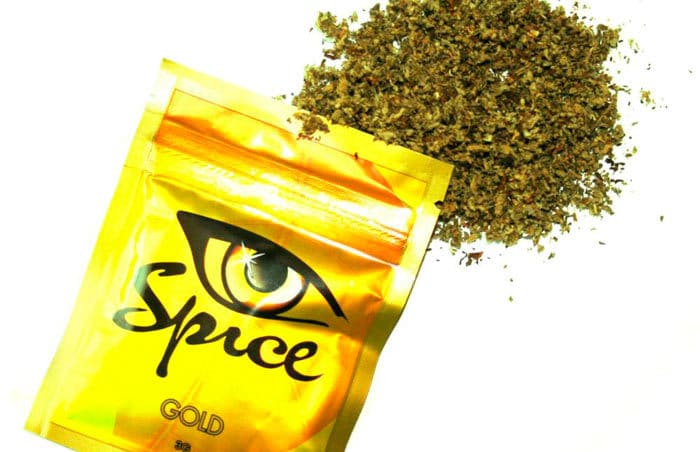
New directions in substance abuse: the "Spice" phenomenon
DOI:
https://doi.org/10.35954/SM2016.35.2.3Keywords:
Cannabinoids; Receptors, Cannabinoid; Cannabinoid Receptor Agonists; Cannabis sativa; Drug Agonism; Hazardous Substances; Substance Abuse DetectionAbstract
Synthetic cannabinoids today comprise an extensive series of compounds obtained from molecules originally developed for scientific research on the endocannabinoid system.
Entering the market as designer drugs under the guise of legality, their effects on human consumption and safety remain poorly understood.
Their number and variety have grown steadily since the first findings in 2008, as well as reports of various toxicities and even fatal outcomes. Considering that Uruguay is no stranger to this situation, as more and more users of synthetic drugs such as Spice or MDMA and other amphetamines appear in the practice, a brief review of the problem is presented. It is important for the general practitioner and emergency physician to be aware of the dangerous consequences that may arise from the greater potency and duration of action of these substances on cannabinoid receptors compared to natural cannabinoids.
Downloads
References
(1) Mechoulam R, Gaoni Y. A total synthesis of DL-Delta-1- Tetrahydrocannabinol, the active constituent of Hashish. J Am Chem Soc 1965; 87:3273-75.
(2) Matsuda LA, Lolait SJ, Brownstein MJ, Young AC, Bonner TI. Structure of a cannabinoid receptor and functional expression of the cloned cDNA. Nature 1990; 346(6284): 561-4.
(3) Mechoulam R, Parker L. The endocannabinoid system and the brain. Annu Rev Psychol 2013; 64:21-47.
(4) Munro S, Thomas KL, Abu-Shaar M. Molecular characterization of a periferal receptor for cannabinoids. Nature 1993; 365(6441):61-65.
(5) Alvarez JC, Pape E, Grassin-Delyle S, Knapp A. Cannabinoids de synthèse: aspects pharmacologiques. Toxicol Anal et Clinique 2015; 27(1):23-32.
(6) United Nations Office on Drugs and Crime (UNODC). Global Smart Update. Special Segment. Synthetic Cannabinoids: Key factors about the largest and most dynamic group of NPS. Volume 13, March 2015, 12 p. Disponible en: https://www.unodc.org/documents/scientific/Global_SMART_Update_13_web.pdf [Consulta 16/08/2016]
(7) United Nations Office on Drugs and Crime (UNODC). Synthetic cannabinoids in herbal products. January 2011, 26 p. Disponible en: https://www.unodc.org/documents/scientific/Synthetic_Cannabinoids.pdf [Consulta 16/08/2016]
(8) Schwartz M, Trecki J, Edison LA, Steck AR, Arnold JK, Gerona RR. A common source outbreak of severe delirium associated with exposure to the novel synthetic cannabinoid ADB-PINACA. J Emerg Med 2015; 48(5):573-80.
(9) European Monitoring Centre for Drugs and Drug Addiction. Thematic paper. Understanding the 'Spice' phenomenon. Luxembourg: Office for Official Publications of the European Communities, 2009, 37 p.
(10) European Monitoring Centre for Drugs and Drug Addiction. Perspectives on Drugs. Synthetic cannabinoids in Europe. 8 p. Disponible en: http://www.emcdda.europa.eu/system/files/publications/2753/Synthetic%20cannabinoids_2016_ES.pdf [Consulta 16/08/2016]
(11) De Oliveira Alves A, Spaniol B, Linden R. Cannabinoides sintéticos: drogas de abuso emergentes. Rev Psiq Clin 2012; 39(4):142-48.
(12) Péllisier-Alicot AL. Les cannabinoïdes de synthèse: épidémiologie, modalités de consommations et effets cliniques. Toxicol Anal et Clinique 2015; 27(1):33-40.
(13) Krondstrand R, Roma M, Thelander G, Eriksson A. Unintentional fatal intoxications with mitragynine and desmethyltramadol from the herbal blend Krypton. J Anal Toxicol 2011; 35(4):242-47.
(14) Law R, Schier J, Martin C, Chang A, Wolkin A. Notes from the Field: Increase in Reported Adverse Health Effects Related to Synthetic Cannabinoid Use - United States, January-May 2015. MMWR 2015; 64(22):618-19.
(15) Trecki J, Gerona RR, Schwartz MD. Synthetic cannabinoid-related illnesses and deaths. N Engl J Med 2015; 373(2):103-107.
(16) Wohlfarth A, Scheidweiler K, Castaneto M, Gandhi A, Desrosiers N, Klette K et al. Urinary prevalence, metabolite detection rates, temporal patterns and evaluation of suitable LC-MS/MS targets to document synthetic cannabinoid intake in US military urine specimens. Clin Chem Lab Med 2015; 53(3):423-434.
(17) Advisory Council on the Misuse of Drugs. ACMD. Third Generation Synthetic Cannabinoids. 29 p. Disponible en: https://www.gov.uk/government/uploads/system/uploads/attachment_data/file/380161/CannabinoidsRepor.pdf [Consulta 12/09/2016]
(18) Mustata C, Torrens M, Pardo R, Pérez C, Psychonaut Web Mapping Group, Farré M. Spice drugs: cannabinoids as a new designer drugs. Adicciones 2009; 21(3):181-6.
(19) Auwärter V, Dresen S, Weinmann W, Müller M, Pütz M, Ferreirós N. Spice and other herbal blends: harmless incense or cannabinoid designer drugs? J Mass Spectrom 2009; 44(5): 832-7.
(20) Fattore L, Fratta W. Beyond THC: The new generation of cannabinoid designer drugs. Front Behav Neurosci 2011; 5 : 60.
(21) Spaderma M. Addy PH, D'Souza DC. Spicing thing up: synthetic cannabinoids. Psychopharmacol (Berl) 2013; 228(4):525-40.
(22) Musshoff F, Madea B, Kernbach-Wighton G, Bicker W, Kneisel S, Hutter M, et al. Driving under the influence of synthetic cannabinoids (“Spice”): a case series. Int J Legal Med 2014:128(1):58-64.
(23) Müller H, Huttner HB, Köhrmann M, Wielopolski JE, Kornhuber J, Sperling W. Panic attack after Spice abuse in a patient with ADHD. Pharmacopsychiatry 2010; 43(4): 152-153.
(24) Every-Palmer S. Synthetic cannabinoid JWH-018 and psychosis: an explorative study. Drug Alcohol Depend 2011; 117(2-3):152-7.
(25) Hurst D, Loeffler G, McLay R. Psychosis associated with synthetic cannabinoid agonists: a case series. Am J Psychiatry 2011; 168(10):1119.
(26) Zimmermann NS, Winkelmann PR, Pilhatsch M, Nees JA, Spanagel R, Schulz K. Withdrawal phenomena and dependence síndrome after the consumption of “Spice Gold”. Dtsch Arztbl Int 2009; 106(27): 464-467.
(27) McQuade D, Hudson S, Dargan PI, Wood DM. First european case of convulsions related to analytically confirmed use of the synthetic cannabinoid receptor agonist AM2201. Eur J Clin Pharmacol 2013; 69 (3): 373-376.
(28) Mir A, Obafemi A, Young A, Kane C. Myocardial infarction associated with use of the synthetic cannabinoid K2. Pediatrics 2011; 128(6): e1622-7.
(29) Centers for Disease Control and Prevention (CDC). Acute kidney injury associated with synthetic cannabinoid se - Multiple states, 2012. MMWR Morb Mortal Wkly Rep 2013; 62(6):93-98.
(30) Thornton SL, Akpunonu P, Glauner K, Hoehn KS, Gerona R. Unintentional pediatric exposure to a synthetic cannabinoid (AB-PINACA) resulting in coma and intubation. Ann Emerg Med 2015; 66(3):343-44.
(31) van Amsterdam J, Brunt T, van den Brink W. The adverse health effects of synthetic cannabinoids with emphasis on psychosis-like effects. J Psychopharmacol 2015; 29(3):254-63.
(32) Patton AL, Chimalakonda KC, Moran CL, McCain KR, Radominska-Pandya A, James LP, et al. K2 toxicity: fatal case of psychiatric complications following AM2201 exposure. J Forensic Sci 2013; 58(6):1676-80.
(33) Klavž J, Gorenjak M, Marinšek M. Suicide attempt with a mix of synthetic cannabinoids and synthetic cathinones: Case report of non-fatal intoxication with ABCHMINACA, AB-FUBINACA, alpha-PHP, alpha-PVP and 4-CMC. Forensic Sci Int 2016; 265:121-24.
(34) Behonick G, Shanks KG, Firchau DJ, Mathur G, Lynch CF, Nashelsky M, et al. Four postmortem case reports with quantitative detection of the synthetic cannabinoid, 5F-PB-22. J Anal Toxicol 2014; 38(8):559-62.
(35) Karch SB, Drummer OH. Karch's Pathology of Drug Abuse. Fifth Edition. CRC Press : Boca-Raton, USA. 2016, p. 820-824.
(36) de Jager AD, Warner JV, Henman M, Ferguson W, Hall A. LC-MS/MS method for the quantitation of etabolites of eight commonly-used synthetic cannabinoids in human urine. An Australian perspective. J Chromatogr B Analyt Technol Biomed Life Sci 2012; 897:22-31.
(37) Coulter C, Garnier M, Moore C. Synthetic cannabinoids in oral fluid. J Anal Toxicol 2011; 35(7):424-30.
(38) Uchiyama N, Kikura-Hanajiri R, Ogata J, Goda Y. Chemical analysis of synthetic cannabinoids as designer drugs in herbal products. Forensic Sci Int 2010; 198(1-3):31-8.
(39) Ozturk S, Ozturk YE, Yeter O, Alpertunga B. Application of a validated LC-MS/MS method for JWH073 and its metabolites in blood and urine in real forensic cases. Forensic Sci Int 2015; 257:165-171.
(40) Wohlfarth A, Castaneto MS, Zhu M, Pang S, Scheidweiler KB, Krondstand R, Huestis MA. Penrylindole/Pentylindazole synthetic cannabinoids and their 5-Fluoro analogs produce different primary metabolites: Metabolite profiling for AB-PINACA and 5FAB-PINACA. APPS J 2015; 17(3):660-77.
(41) Wurita A, Jasegawa K, Minakata K, Gonmori K, Nozawa H, Yamagishi I, Suzuki O, Watanabe K. (in press). Identification and quantification of metabolites of AB-CHMINACA in a urine specimen of an abuser. Leg Med (Tokyo) 2016; 19:113-8.
(42) Uchiyama N, Matsuda S, Kawamura M, KikuraHanajiri R, Goda Y. Two new-type cannabimimetic quinolynil carboxylates, QUPIC and QUCHIC, two new cannabimimetic carboxamide derivatives, ADB FUBINACA and ABDICA, and five synthetic cannabinoids detected with a thiophene derivative alphaPVT and a opioid receptor agonist AH-7921 identified in illegal products. Forensic Toxicol 2013; 31(2):223-40.
(43) Wurita A, Hasegawa K, Minakata K, Gonmori K, Nozawa H, Yamagishi I, et al. Identification and quantitation of 5-Fluoro-ADB-PINACA and MABCHMINACA in dubious herbal products. Forensic Toxicol 2015; 33(2):213-20.
(44) Oficina de las Naciones Unidas contra la Droga y el Delito. UNODC. Informe Mundial sobre las Drogas. Informe Ejecutivo 2015. 15 p. Disponible en: https://www.unodc.org/documents/wdr2015/WDR15_ExSum_S.pdf [Consulta 23/09/2016]
Published
How to Cite
Issue
Section
License
Until 2024 we use the Creative Commons Attribution/NonCommercial Attribution 4.0 International License https://creativecommons.org/licenses/by-nc/4.0/deed.es. Which states that: you are free to share, copy and redistribute the material in any medium or format, as well as to adapt, remix, transform and build upon the material. Under the following terms:
Attribution: you must give proper credit , provide a link to the license, and indicate if changes have been made . You may do so in any reasonable manner, but not in such a way as to suggest that you or your use is endorsed by the licensor.
NonCommercial: you may not use the material for commercial purposes.
As of 2025 authors retain their copyright and assign to the journal the right of first publication of their work, which shall simultaneously be subject to the license https://creativecommons.org/licenses/by-nc-sa/4.0/deed.es that permits sharing, copying and redistribution of the material in any medium or format provided that initial publication in this journal is indicated. Adapt, remix, transform and build upon the material. If you remix, transform, or build from the material, you must distribute your contribution under the same license as the original and may not make use of the material for commercial purposes.
Under the following terms:
1. Attribution: you must give proper credit, provide a link to the license, and indicate whether changes have been made. You may do so in any reasonable manner, but not in such a way as to suggest that you or your use is endorsed by the licensor.
2. NonCommercial: you may not use the material for commercial purposes.
3. ShareAlike: if you remix, transform or build upon the material, you must distribute your contribution under the same license as the original.




PlumX Metrics