Mind and heart. Psychosocial factors of cardiovascular risk.
DOI:
https://doi.org/10.35954/SM2005.27.1.6Keywords:
Cardiovascular Diseases; Psychology.Abstract
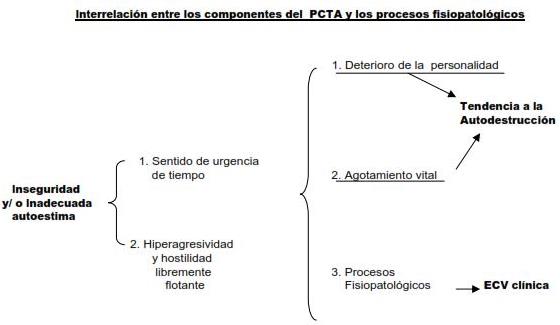
Systematic research into the relationship between the heart and the mind began in the late 1950s with the pioneering work of Meyer Friedman and Ray Rosenman, two San Francisco cardiologists who coined the term Pattern Behavioral Type A (PCTA). Since that date, a large amount of research has been generated between psychosocial factors and cardiovascular disease (CVD). The factors studied that appear to be the most important are: a) PCTA, b) Anger and hostility, c) Psychological stress, d) Work pressure, e) Vital exhaustion, f) Social isolation and lack of support, g) Depression, h) Anxiety, I) Cardiac denial. Risk assessment involves a group of psychosocial factors that increase vulnerability to the development of CVD. These factors include individual predispositions, such as stress reactivity, as well as characteristics of the social and physical environment.(3a) In this brief review we will highlight from the scientific literature, the link between these factors and CVD, followed by conclusions regarding the validity of these relationships in the active and thriving field of Cardiac Psychology (1).
Downloads
References
(1) ALLAN R, SCHEIDT S. Heart & Mind. The practice of Cardiac Psychology. Washington DC. American Psychological Association (APA). 1996.
(2) BELAR CD, DEARDORFF W. Clinical Health Psychology in Medical Settings. Washington DC. American Psychological Association (APA) 1995.
(3) BENNETT S, PERRY NW, ROZENSKY RH. Handbook of Clinical Health Psychology. Washington DC. American Psychological Association (APA). 2002
(3) BLUMENTHAL JA, BURG M, BAREFOOT J, WILLIAMS RB, HANEY T, ZIMET G. Social Support, Type A behavior and coronary artery disease. USA. Psychosomatic Medicine 1987:49;331-340.
(4) BOOTH-KEWLEY S, FRIEDMAN HS. Psychological predictors of heart disease: a quantitative review. Psychological Bulletin 1987:101;343-362.
(5) FERNANDEZ F. Depression and its treatment in cardiac patients. USA. Texas Heart Institute Journal 1993:20;188-197.
(6) GARFIELD SL, BERGIN AE. Psychotherapy and Behavior Change. USA 1986. John Wiley & Sons, Inc.
(7) GOODHEART CD, LANSING MH. Treating people with chronic disease: a psychological guide. American Psychological Association (APA). 1997.
(8) HELMER DC, RAGLAND DR, LYME LS. Hostility and coronary artery disease. American Journal of Epidemiology 1991:133; 112 -122.
(9) LAHAM M. Psicocardiología. Abordaje psicológico al paciente cardíaco. Bs. As. 2001. Ed Lumiere.
(10) LATORRE POSTIGO JM, BENEIT MEDINA PJ. (1994): Psicología de la Salud. Argentina. 1994 Ed Lumen.
(11) LAZARUS RS, FOLKMAN S. Stress, appraisal and coping. New York.1984 Springer.
(12) LOWN B. Sudden cardiac death: biobehavioral perspective. Circulation 1987:76(1);186-196.
(13) NICASSIO PM, SMITH TW. Managing Chronic Illness. A biopsychosocial perspective. Washington DC. American Psychological Association (APA). 1995.
(14) SIEGMAN AW, SMITH TW. Anger, hostility and the heart. Hillsdale, NJ:Erlbaum. 1994.
(15) WILLIAMS RB. Refining the Type A hypothesis. Emergence of the hostility complex. USA. American Journal of Cardiology. 1987:60,27J- 32J.
Published
How to Cite
Issue
Section
License
Until 2024 we use the Creative Commons Attribution/NonCommercial Attribution 4.0 International License https://creativecommons.org/licenses/by-nc/4.0/deed.es. Which states that: you are free to share, copy and redistribute the material in any medium or format, as well as to adapt, remix, transform and build upon the material. Under the following terms:
Attribution: you must give proper credit , provide a link to the license, and indicate if changes have been made . You may do so in any reasonable manner, but not in such a way as to suggest that you or your use is endorsed by the licensor.
NonCommercial: you may not use the material for commercial purposes.
As of 2025 authors retain their copyright and assign to the journal the right of first publication of their work, which shall simultaneously be subject to the license https://creativecommons.org/licenses/by-nc-sa/4.0/deed.es that permits sharing, copying and redistribution of the material in any medium or format provided that initial publication in this journal is indicated. Adapt, remix, transform and build upon the material. If you remix, transform, or build from the material, you must distribute your contribution under the same license as the original and may not make use of the material for commercial purposes.
Under the following terms:
1. Attribution: you must give proper credit, provide a link to the license, and indicate whether changes have been made. You may do so in any reasonable manner, but not in such a way as to suggest that you or your use is endorsed by the licensor.
2. NonCommercial: you may not use the material for commercial purposes.
3. ShareAlike: if you remix, transform or build upon the material, you must distribute your contribution under the same license as the original.




PlumX Metrics